
BOOKS

Daina Ramey Berry.
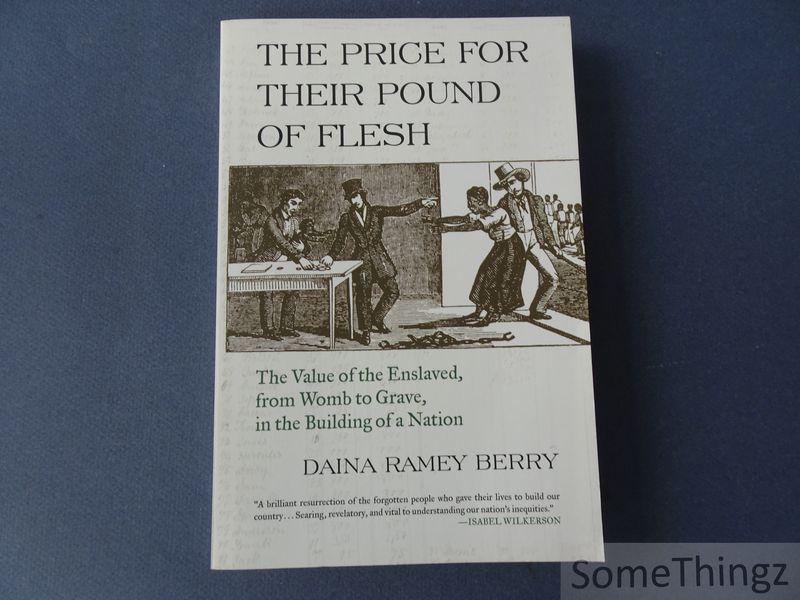
The Price for Their Pound of Flesh : The Value of the Enslaved, from Womb to Grave, in the Building of a Nation.
Boston, Beacon Press, 2017.

€ 13.50
Paperback, 262pp., 15.5x23cm., in very good condition. ISBN: 9780807067147.
Itemnummer 19897 
In life and in death, slaves were commodities, their monetary value assigned based on their age, gender, health, and the demands of the market. The Price for Their Pound of Flesh is the first book to explore the economic value of enslaved people through every phase of their lives - including preconception, infancy, childhood, adolescence, adulthood, the senior years, and death - in the early American domestic slave trade. Covering the full "life cycle", historian Daina Ramey Berry shows the lengths to which enslavers would go to maximize profits and protect their investments. Illuminating "ghost values" or the prices placed on dead enslaved people, Berry explores the little?known domestic cadaver trade and traces the illicit sales of dead bodies to medical schools. This book is the culmination of more than ten years of Berry?s exhaustive research on enslaved values, drawing on data unearthed from sources such as slave?trading records, insurance policies, cemetery records, and life insurance policies. Writing with sensitivity and depth, she resurrects the voices of the enslaved and provides a rare window into enslaved peoples? experiences and thoughts, revealing how enslaved people recalled and responded to being appraised, bartered, and sold throughout the course of their lives. Reaching out from these pages, they compel the reader to bear witness to their stories, to see them as human beings, not merely commodities, and to think differently about slavery, reparations, capitalism, nineteenth?century medical education, and the value of life and death. The Price for Their Pound of Flesh presents a sustained, deeply researched account of how enslaved people in early America were assigned economic value throughout their entire life cycle and even after death, beginning with the monetary appraisals placed on preconception and unborn children and continuing through infancy, childhood, adolescence, adulthood, middle and older age, and even postmortem ?ghost values? assigned to corpses used by medical schools, as historian Daina Ramey Berry integrates quantitative data from slave?trading records, insurance documentation, cemetery reports and life policies with qualitative material drawn from abolitionist songs, auction ads and personal narratives to show how enslaved individuals were commodified and how they themselves navigated and resisted that commodification, illuminating not only the fiscal mechanisms of slavery but also the internal perceptions of self worth or ?soul value? that contemporaries held and the profound impact these practices had on the development of capitalism, reparations discourse, and nineteenth?century medical education, thereby offering readers a compelling and humane reframing of the history of slavery in the United States.