
BOOKS
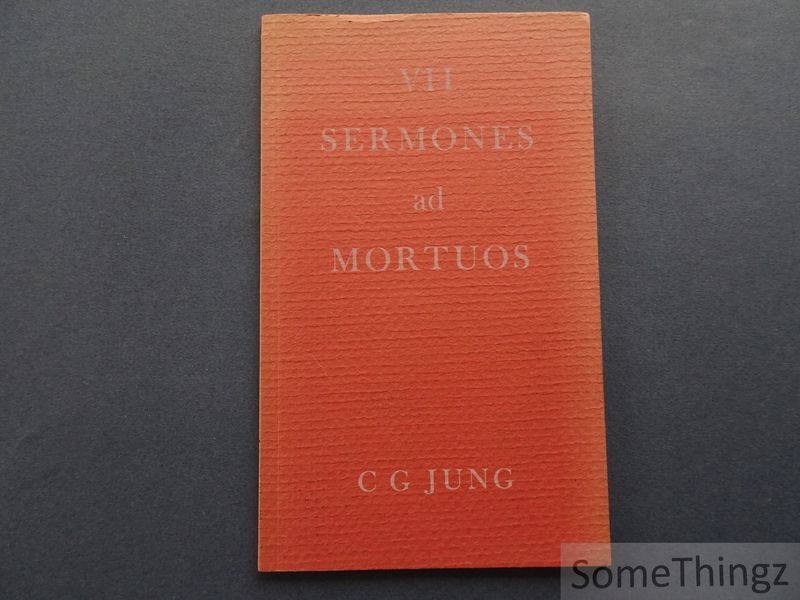
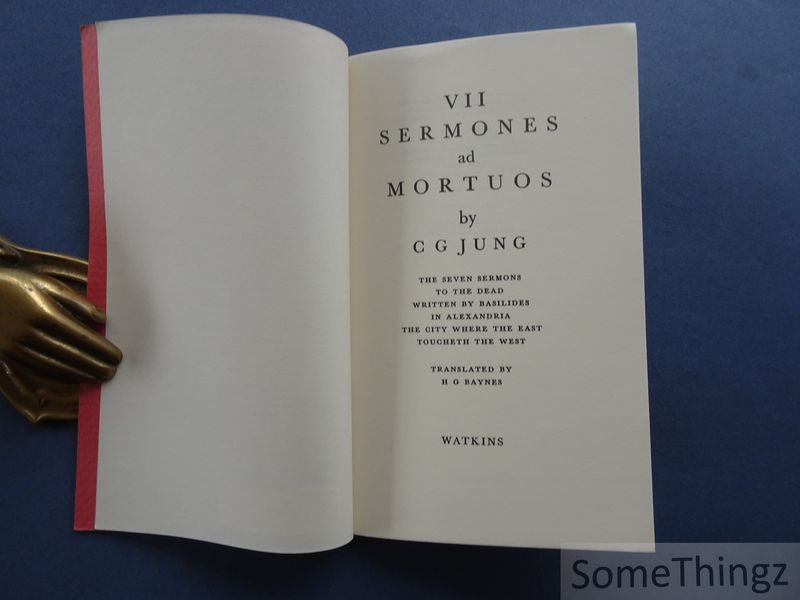

Carl Gustav Jung, H.G. Baynes (transl.).
VII Sermones ad Mortuos. The Seven Sermons to the Dead written by Basilides in Alexandria, the City where the East toucheth the West.
Londen, Stuart & Watkins, 1967.
Sold
Softcover, 34pp., 13,5x22,5cm., in good condition (covers with light traces of use and a bit discolourated, inside very good).
Itemnummer 20241 
This publication consists of seven mystical sermons focusing on the symbolism of life and death and the relationship of the individual to the divine, written in a Gnostic style. Jung presents the texts as originating from Basilides, an early Christian Gnostic teacher from Alexandria, although it is in fact Jung himself who expresses himself in this pseudepigraphical work. The sermons deal with themes such as the nature of nothingness and fullness, the role of the supreme and the inferior in human experience, and the paradoxical nature of Abraxas as a symbol that unites good and evil, light and darkness. The whole forms a poetic, mystical exploration that is more statement than systematic doctrine, and serves as a key to the inner transformative processes that Jung later developed further. Carl Gustav Jung (1875-1961) was a Swiss psychiatrist, psychoanalyst and founder of analytical psychology. Known for his concepts of the collective unconscious, archetypes, introversion and extraversion, and the process of individuation, Jung exerted a profound influence on psychology, art, religion and cultural criticism. His work combines clinical observation with mythology, religious symbolism and personal experience. In addition to his clinical and theoretical publications, Jung continued to work on experimental and introspective material such as Liber Novus (The Red Book) and the texts surrounding VII Sermones ad Mortuos, which reflect his deeply personal explorations of the psyche and spiritual insight.?