
BOOKS
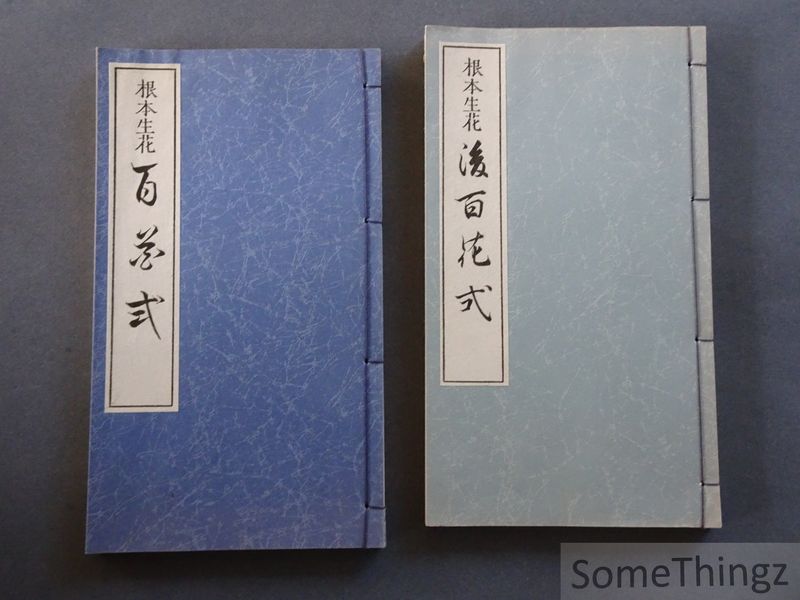
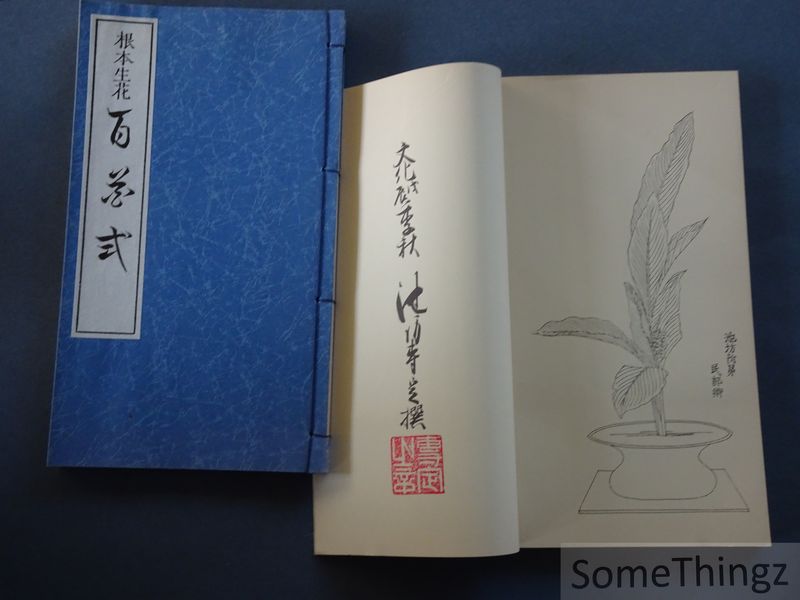
Ikenobo Senjo.
Volume 1: Konpon Ikebana Hyakka-Shiki (Fundamental principles of flower arrangement; 100 flower styles). / Volume 2: Konpon Ikebana Go-hyakka-Shiki (Fundamental principles of flower arrangement. The sequel to 100 flower styles) [Facsimile, 1982 edition in japanese language.]
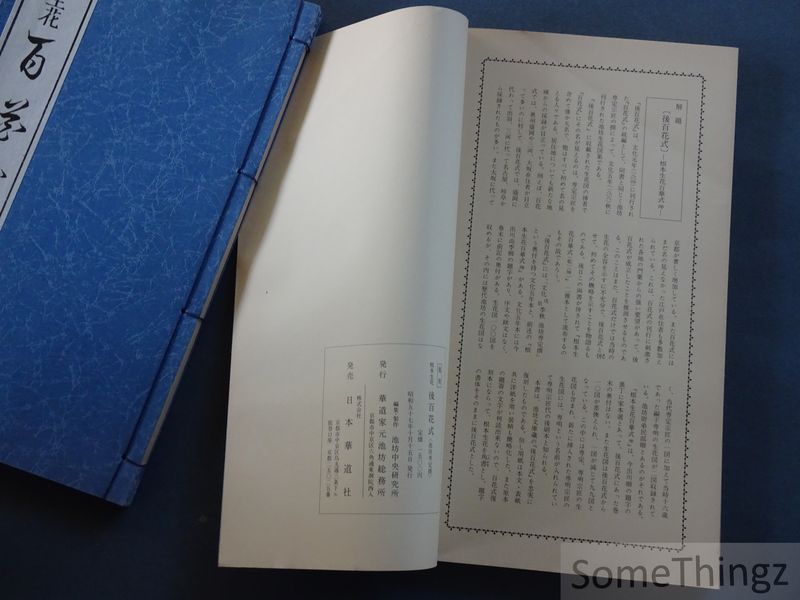
Kyoto, Kado Ikenobo, 1982. Facsimile reprint.

€ 195.00
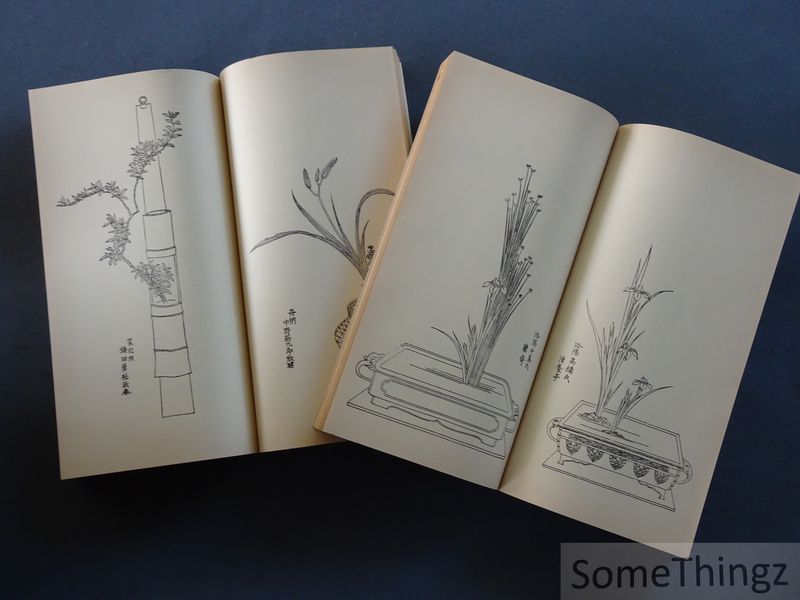
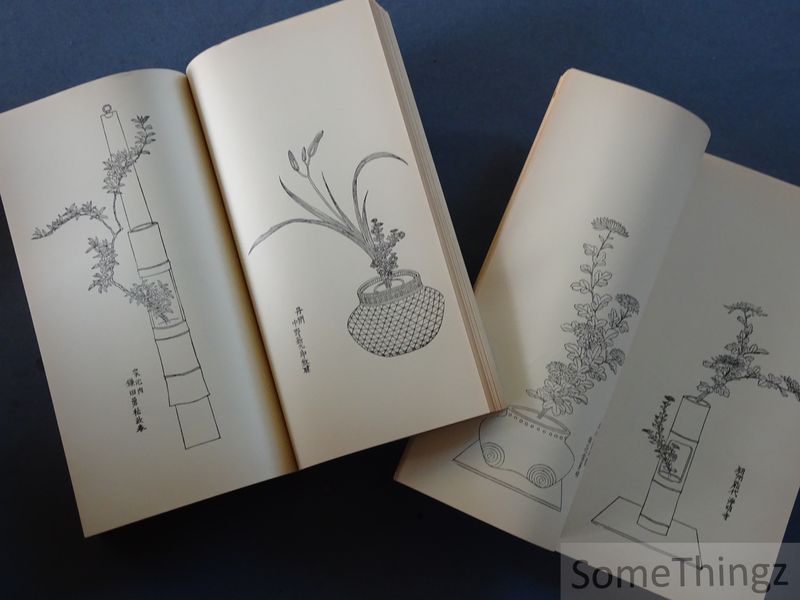
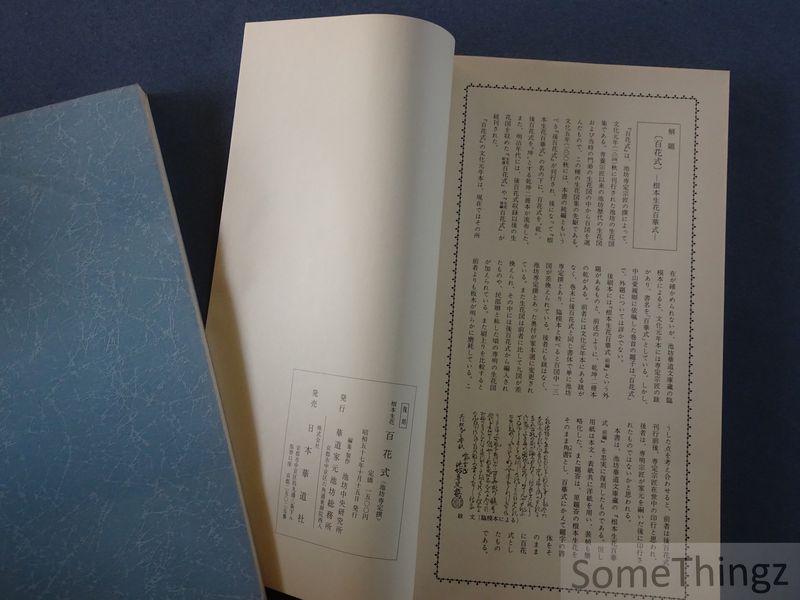
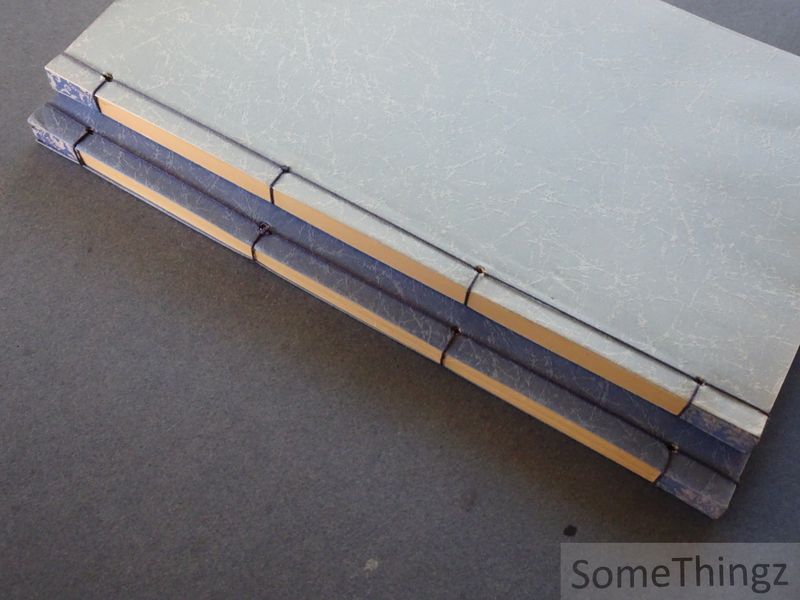
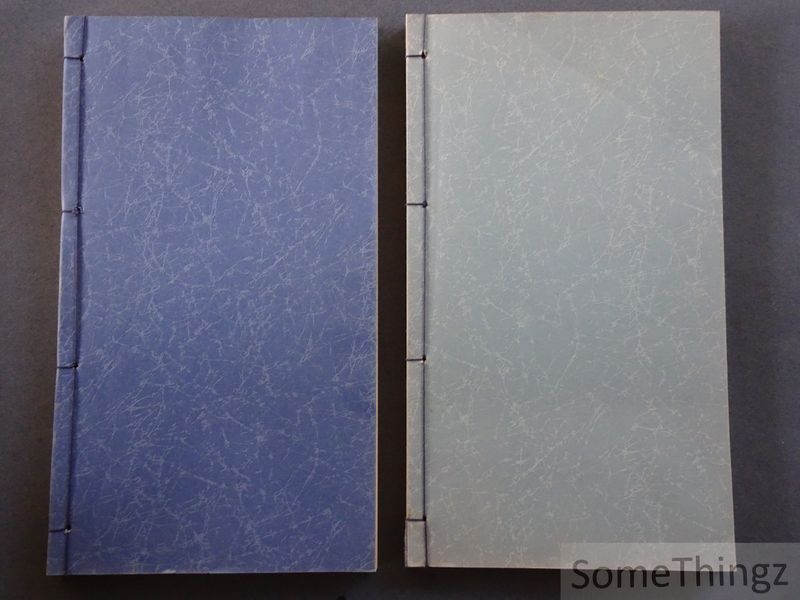
2 vols., japanese style binding (four-eye binding, single-side printing on 1 continuous long sheet of paper), each volume 108pp (or 53 folded pages), 16x28cm., ills. in b/w., in very good condition. Facsimile, 1982 edition in japanese language.
Itemnummer 22476 
The books 'Konpon Ikebana Hyakka-shiki' (1804) and its successor, 'Go-hyakka-shiki' (1808), are historical milestones in the Japanese art of flower arranging. They represent the very first printed collections of floral designs ('seikazush?') in the history of the Ikenob? school. The first volume contains a carefully curated collection of 100 model floral arrangements in the 'Sh?ka' (or 'Seika') style. The term 'Konpon' ('foundation' or 'basis') indicates that this book served as the official blueprint for a structured style of flower arranging that was rapidly gaining popularity at the time. The arrangements demonstrate how plants, branches, and flowers should be placed in vases - in a manner that is both natural and highly stylized - based on cosmic principles (such as the balance between heaven, earth, and humanity). The second volume supplements the initial hundred styles with a new series of compositions. What makes this volume unique is that it includes a large number of creations and interpretations by regional masters and advanced students from outside Kyoto. It illustrates how the strict guidelines established in the first volume had spread throughout Japan in practice and were being adapted at the local level. Ikenobo Senjo (1768-1840) was the 40th Grand Master ('Iemoto') of the Ikenobo school - the oldest and most influential tradition within the Japanese art of flower arrangement. Reformer of the Floral Arts: Senjo lived and worked during the late Edo period (the Bunka-Bunsei eras). He played a pivotal role in modernizing and systematizing the school. Under his leadership, the number of active students across Japan grew to tens of thousands. Founder of the Shoka Style: Prior to Senjo?s tenure, the art of flower arrangement was dominated by the monumental and highly complex Rikka style. Senjo perfected and formalized the Shoka style, which is far more elegant, compact, and accessible. He introduced the Mikitonoe technique - the meticulous shaping and bending of primary and secondary branches into an ideal asymmetrical triangle - thereby laying the foundation for modern Ikebana theory. In addition to the Hyakka-shiki books, he published his magnum opus in 1820: Soka Hyakki This masterpiece, illustrated by renowned artists from the Shijo school, established the definitive aesthetic direction for traditional flower arrangement. (AI-generated content description)